
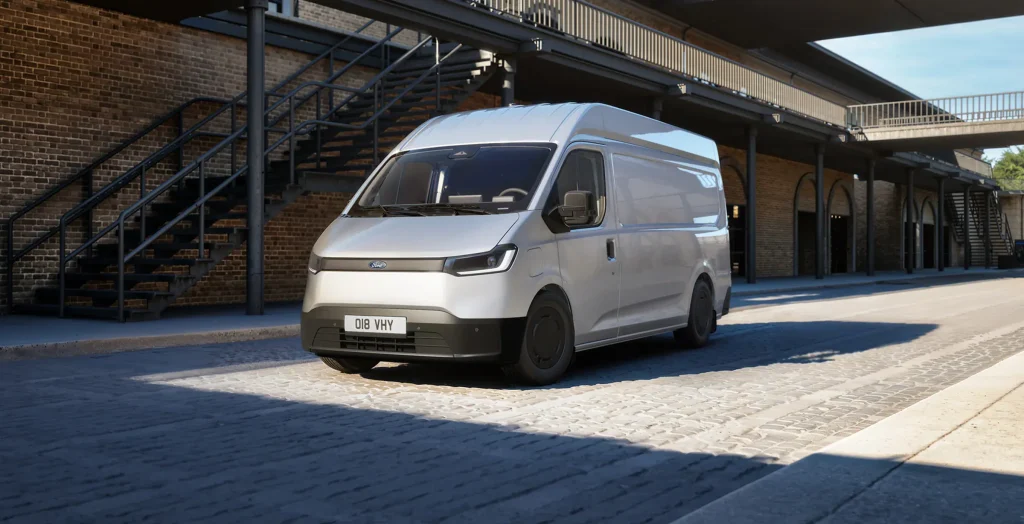
New Electric Ford Van
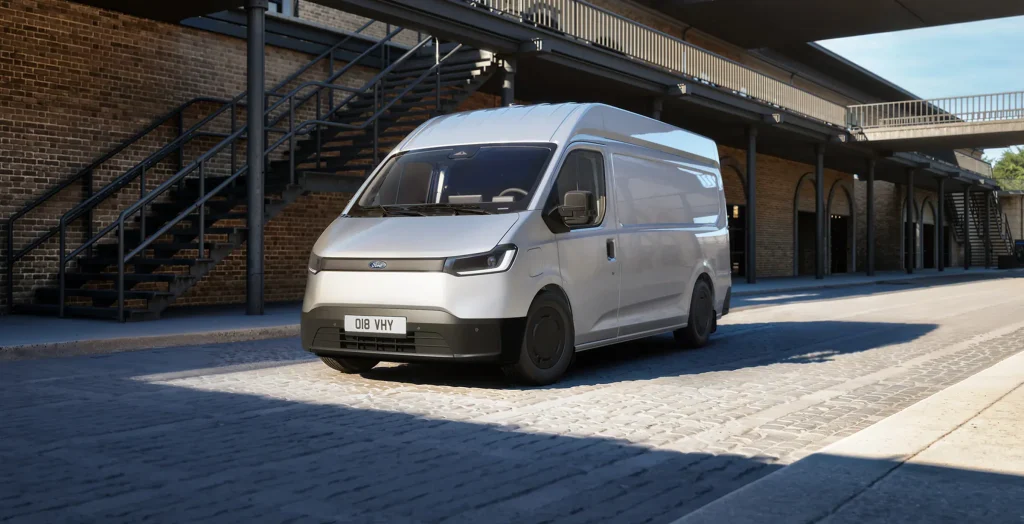
The new electric Ford Transit City marks a deliberate evolution in Ford’s commercial vehicle design, moving toward a more streamlined and minimalist form. It is conceived from the outset as an electric vehicle for dense urban environments, and that intent is reflected in both its proportions and its surface treatment.
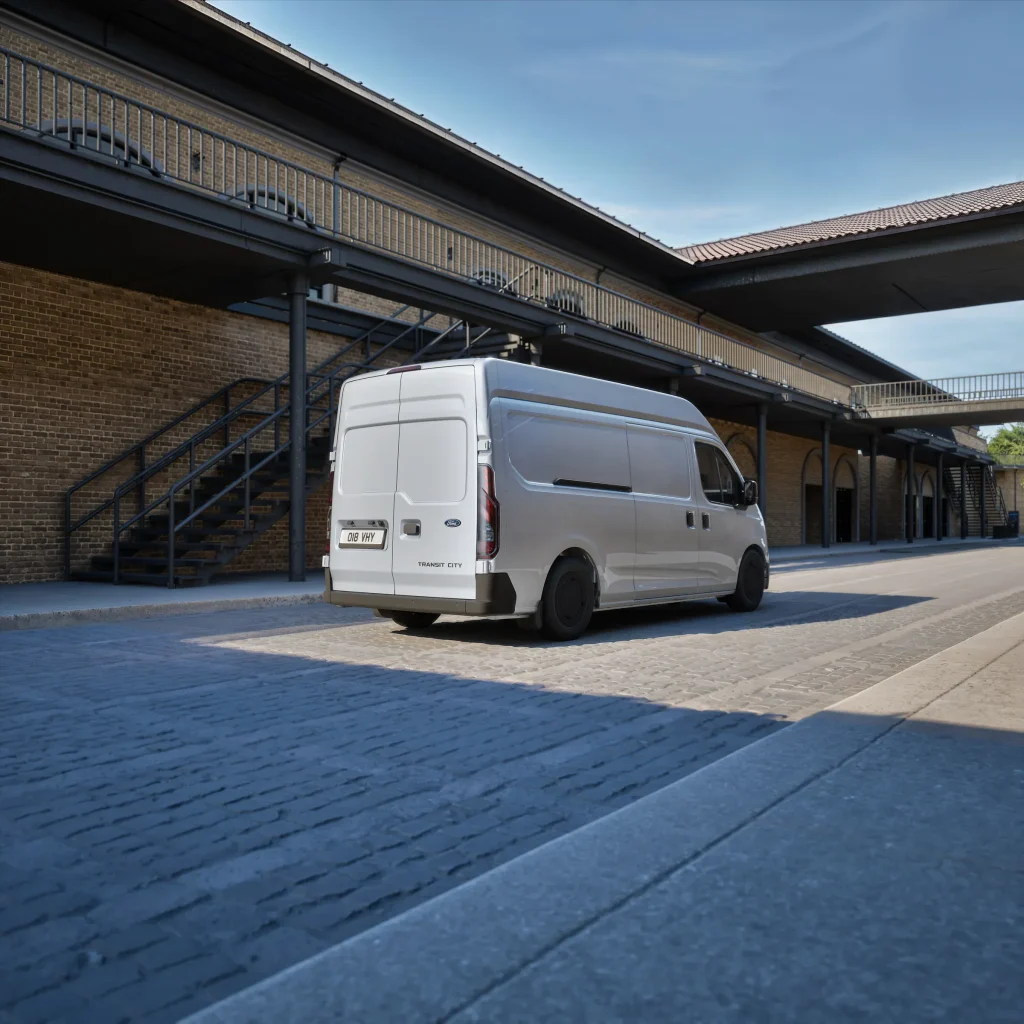
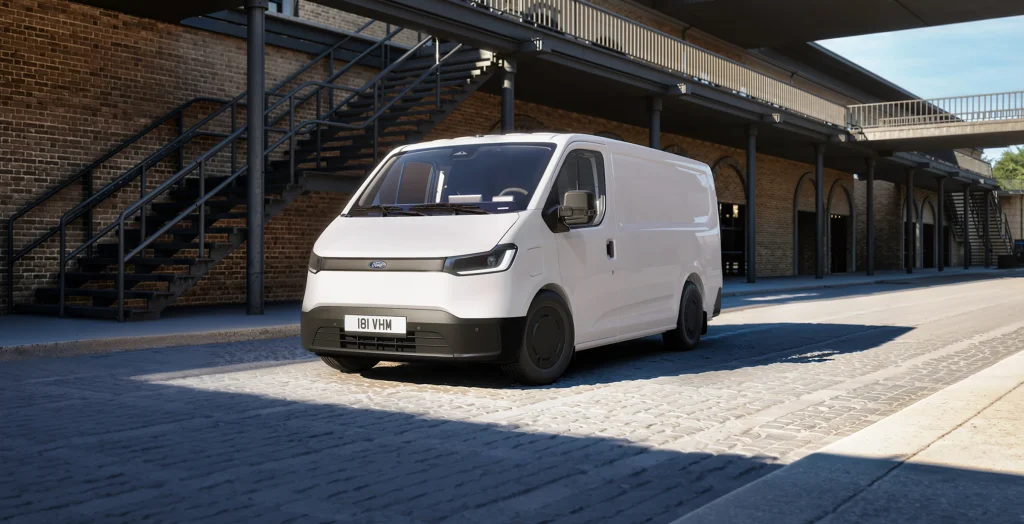
The exterior is clean and simple. Smooth, uninterrupted surfaces replace the layered styling of older vans. The front uses a closed grille — standard for EVs — integrated with a horizontal light bar that visually widens the vehicle. The body relies on proportion rather than decoration. It looks more like a modern industrial product than a traditional commercial van.
The Transit City sits in the one-ton class, between smaller and larger Transit models. Despite its size, it doesn’t look bulky, thanks to balanced dimensions and tight panel fit.
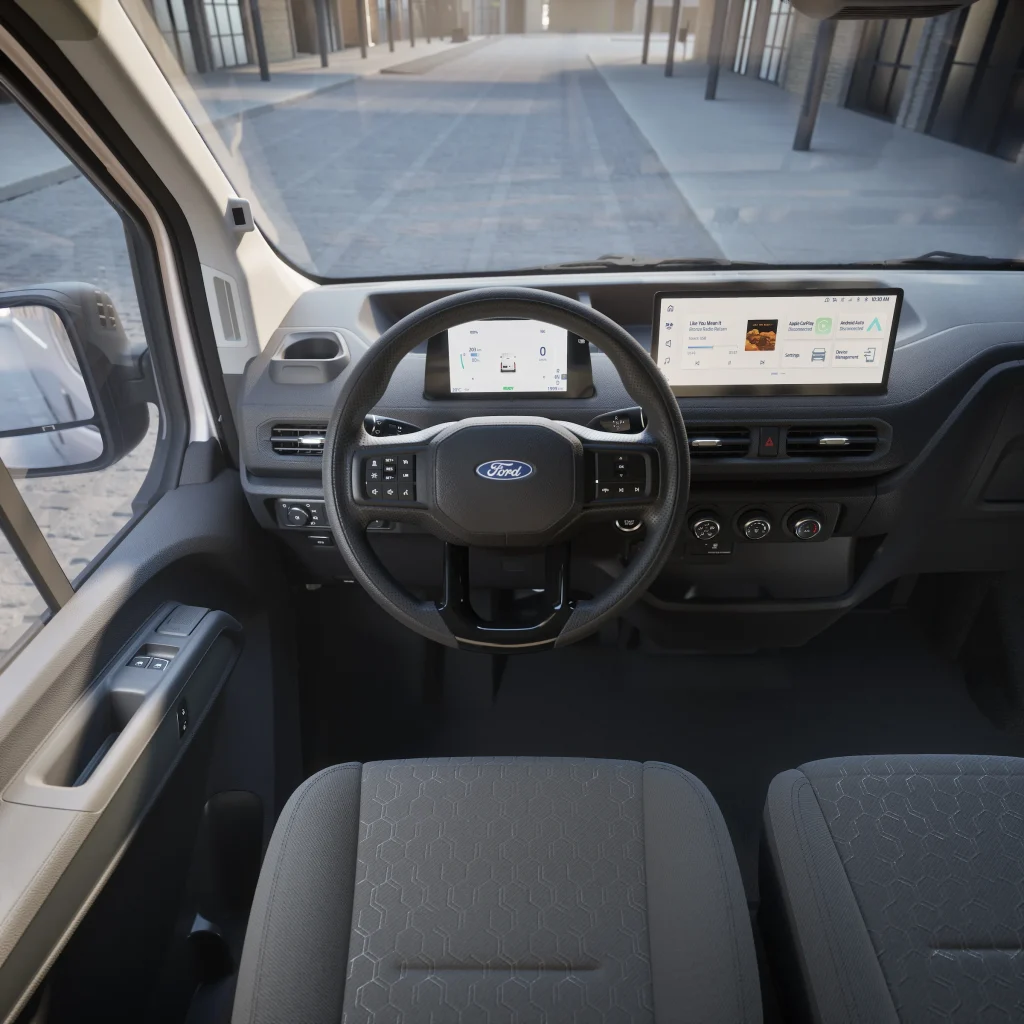
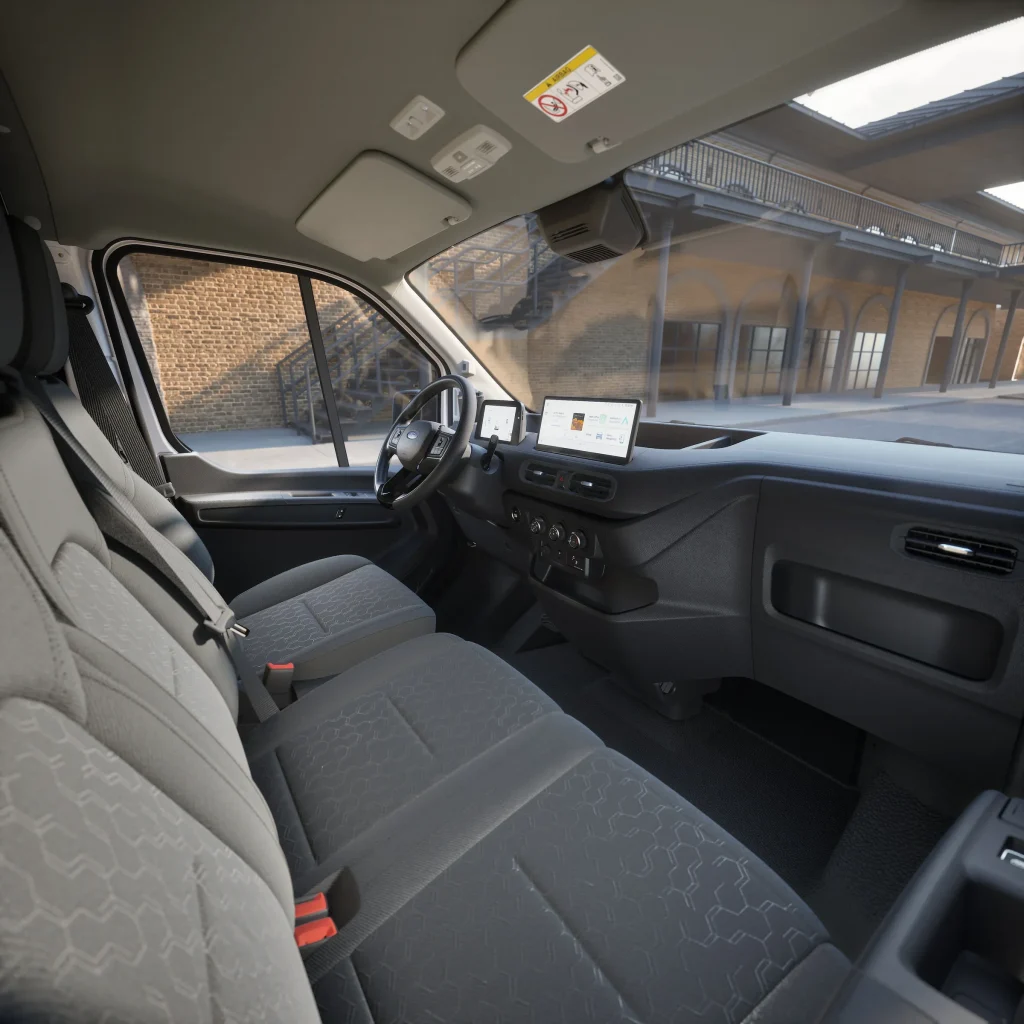
Inside, the cabin is straightforward. A central display handles most controls, reducing physical buttons and dashboard clutter. Storage is built into the dash structure. It’s a functional workspace without unnecessary visual complexity.
Powertrain and range
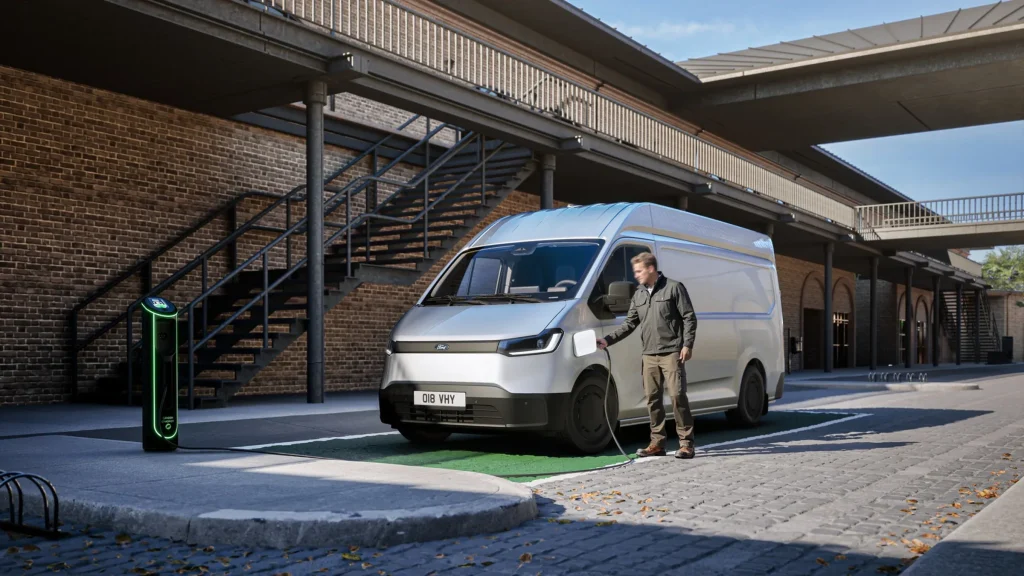
The Transit City uses a single electric motor rated at 110 kW (150 hp) and a 56 kWh lithium iron phosphate battery. LFP chemistry is a practical choice here — it handles frequent charging cycles well and is more cost-stable than alternatives. Range is up to 250 km, which covers typical urban delivery routes comfortably.
DC fast charging takes the battery from 10–80% in 30–35 minutes. AC charging at 11 kW supports overnight depot charging. The system is built for daily urban use, not long-distance trips.
Cargo and configurations
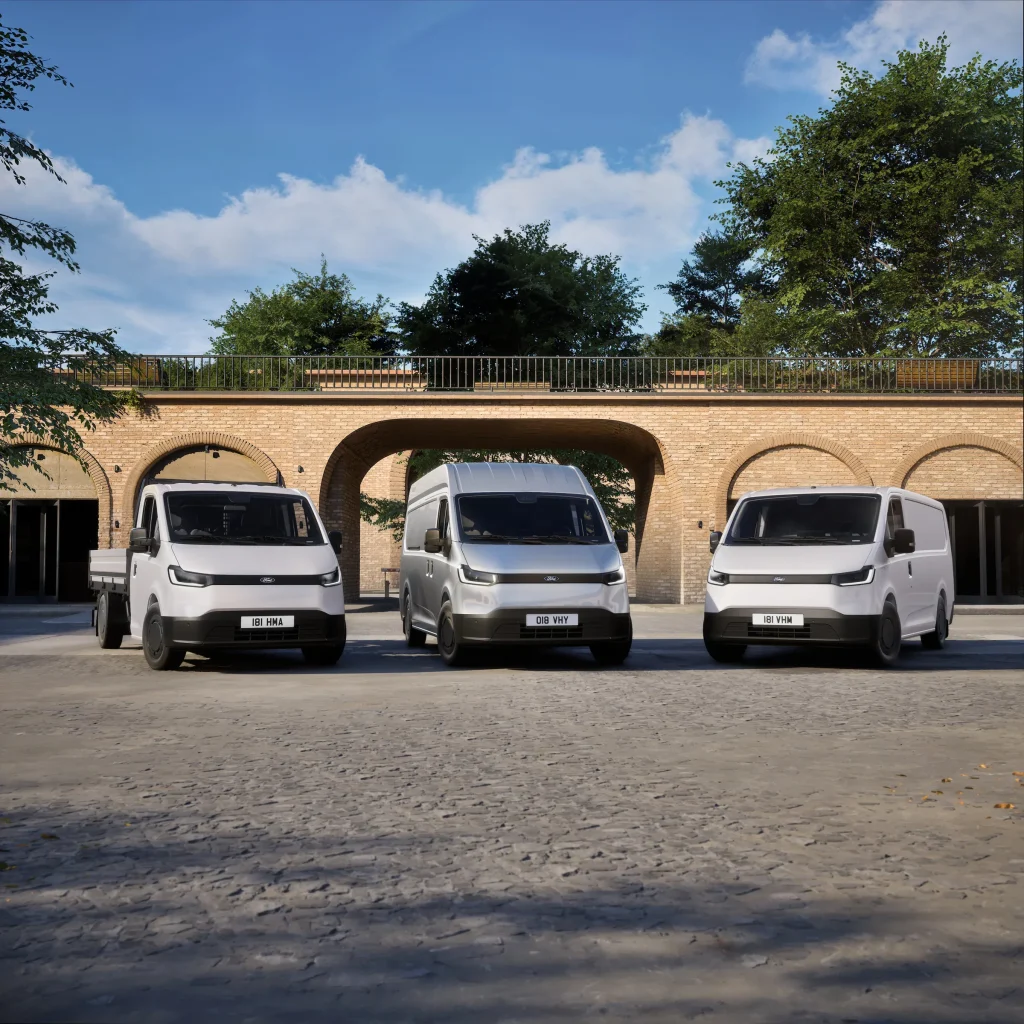
Cargo volume is up to 8 m³ depending on configuration, with a payload capacity of up to 1,275 kg. It’s available as a panel van or chassis cab, allowing it to serve different commercial roles without the exterior design getting in the way of function.
Availability
The Transit City is a European-market-only model, launching in late 2026. It won’t be sold in North America, reflecting higher European demand for compact urban delivery vehicles and differing regulations.
Replies posted on Bluesky will appear here automatically.